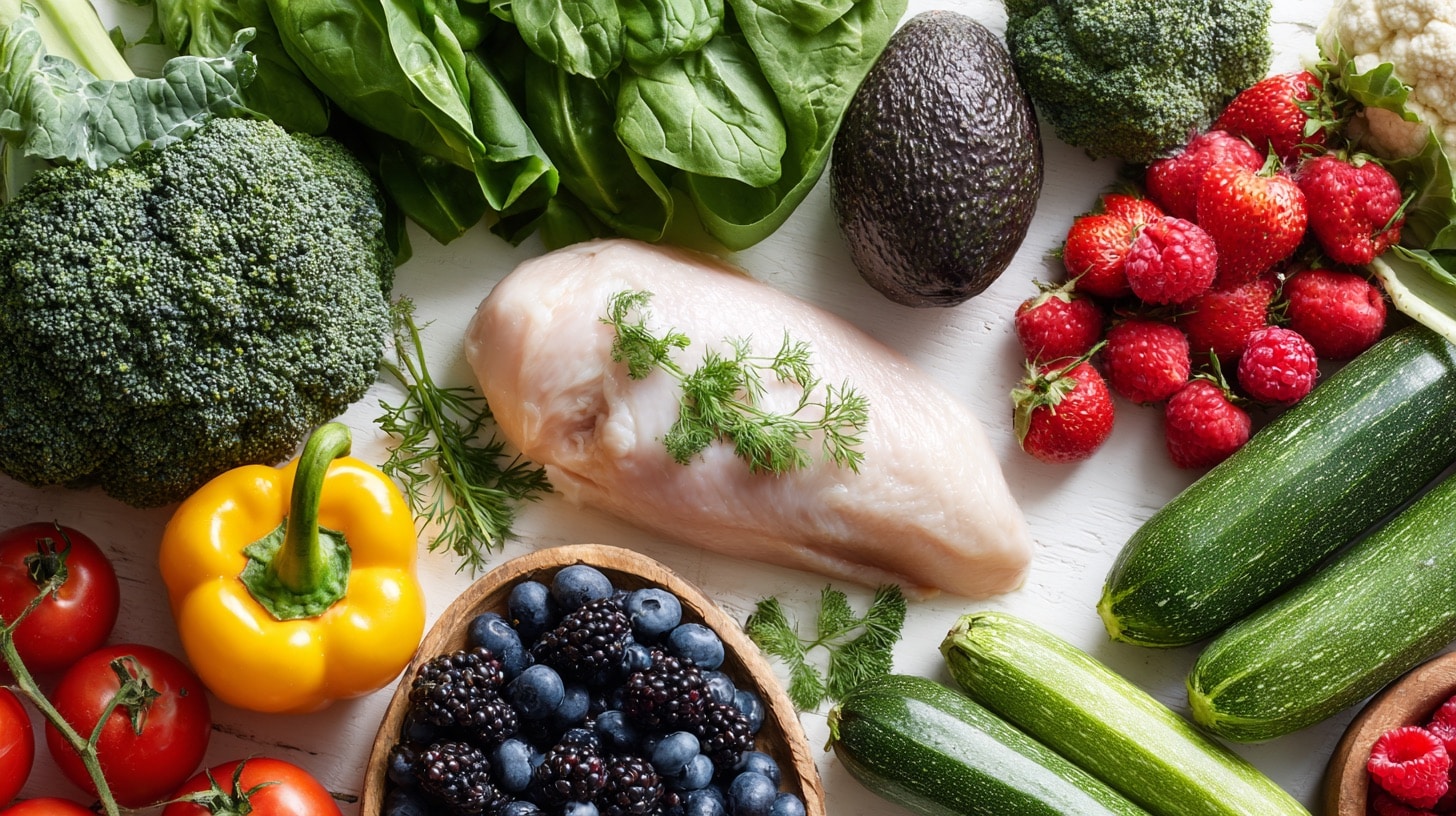
Here’s one of the biggest myths about weight loss: you have to eat tiny portions and be hungry all the time. That’s complete nonsense. The reality? I often eat MORE food now than I did before I started eating in a 500 calorie deficit. The difference is that I’ve learned to choose high volume low calorie foods that fill my plate, fill my stomach, and keep me satisfied—all while staying within my calorie budget.
Ten months in, 15 pounds lighter, and still going strong, I can tell you that discovering high volume eating changed everything for me. Instead of feeling deprived and staring at a sad little plate with a tiny chicken breast and two broccoli florets, I’m eating huge plates of food that look like I’m at a buffet.
At 50, with a mostly sedentary lifestyle (though I aim for 10k steps daily) and burning an additional 150 calories through exercise, I need to feel satisfied with my meals or I won’t stick with this. High volume low calorie foods are how I do that.
Let me show you how to eat a LOT of food while still losing weight.
What Are High Volume Low Calorie Foods?
High volume low calorie foods are exactly what they sound like: foods that take up a lot of space on your plate and in your stomach but don’t have a ton of calories. They’re typically foods that are:
- High in water content
- High in fiber
- Low in fat (since fat is 9 calories per gram vs. 4 for protein and carbs)
- Mostly whole, unprocessed foods
The magic of these foods is that they trigger your body’s fullness signals WITHOUT giving you excess calories. Your stomach has stretch receptors that send signals to your brain when it’s full. High volume foods physically fill your stomach, triggering those receptors and making you feel satisfied.
Compare these two meals:
- Meal A: 2 slices of pizza = 600 calories
- Meal B: 6 oz grilled chicken (210 cal) + 3 cups roasted vegetables (120 cal) + 1 cup cauliflower rice (25 cal) + side salad with 2 tbsp dressing (80 cal) = 435 calories
Meal B is SIGNIFICANTLY more food by volume, yet has fewer calories. That’s the power of high volume eating.
The Best High Volume Low Calorie Foods
Non-Starchy Vegetables
The Champions:
Leafy Greens (Spinach, Kale, Lettuce, Arugula)

- Calories: 5-10 calories per cup raw
- You can eat literally bowls of these for minimal calories
- I often have a salad that’s 4-5 cups of greens as the base of my low calorie lunch or low calorie dinner
Zucchini
- Calories: 20 calories per medium zucchini
- Spiralized into noodles, it replaces pasta at a fraction of the calories
- I use 2-3 zucchini as “noodles” (60 calories) instead of 2 oz regular pasta (200 calories)
Cauliflower

- Calories: 25 calories per cup
- Can be riced, mashed, roasted, or eaten raw
- I eat 1-2 cups of cauliflower rice regularly (25-50 calories) instead of regular rice (200 calories per cup cooked)
Broccoli
- Calories: 30 calories per cup
- Filling, high in fiber, and incredibly versatile
- I easily eat 2-3 cups of roasted broccoli with dinner (60-90 calories)
Cabbage

- Calories: 22 calories per cup raw
- Extremely high volume when shredded
- I can eat 3-4 cups of coleslaw mix (about 80 calories) as a base for various dishes
Bell Peppers
- Calories: 30 calories per medium pepper
- Sweet, crunchy, and colorful
- I add 2-3 peppers to stir-fries or roasted vegetable dishes (60-90 calories)
Mushrooms

- Calories: 15 calories per cup
- Meaty texture that makes dishes feel more substantial
- I add 2 cups of mushrooms to meals for only 30 calories
Brussels Sprouts
- Calories: 38 calories per cup
- Roasted until crispy, they’re like healthy chips
- I eat 2 cups roasted (76 calories) as a side dish
Cucumbers

- Calories: 16 calories per whole cucumber
- Perfect for snacking or adding volume to salads
- Shows up in my zero calorie snacks list
Tomatoes
- Calories: 32 calories per cup chopped
- Add moisture and flavor to dishes
- I add 1-2 cups to various meals freely
Why vegetables are the MVP: You can literally eat POUNDS of vegetables for the calorie equivalent of a handful of chips. They’re the foundation of high volume eating.
Fruits (Strategic Choices)
Not all fruits are created equal for volume eating. These are the best choices:
Berries (Strawberries, Raspberries, Blueberries, Blackberries)

- Calories: 40-85 calories per cup
- High fiber keeps you full
- I eat 1-2 cups of berries daily (80-170 calories)
- Strawberries are especially good at 50 calories per cup
Watermelon
- Calories: 46 calories per cup
- Mostly water, incredibly filling
- I can eat 2-3 cups (92-138 calories) and feel stuffed
Cantaloupe and Honeydew

- Calories: 53-64 calories per cup
- Sweet and hydrating
- Great for volume in the summer
Apples
- Calories: 95 calories per medium apple
- High fiber and you have to chew them, which increases satisfaction
- I eat 1-2 apples daily
Oranges and Grapefruit

- Calories: 60-80 calories per fruit
- High water content and fiber
- The act of peeling and eating sections makes them more satisfying
Why these fruits work: Lower sugar than dried fruits or tropical fruits, high water and fiber content, and they require actual chewing (which increases satiety signals).
Lean Proteins
Protein is essential for high volume eating because it’s the most satiating macronutrient. These proteins give you the most volume for your calories:
Chicken Breast
- Calories: 165 calories per 4 oz
- I eat 5-6 oz portions (about 200-250 calories)
- Takes up significant space on the plate
- Key player in my low calorie high protein foods arsenal
White Fish (Cod, Tilapia, Halibut)

- Calories: 110-140 calories per 4 oz
- Very lean, so you can eat more of it
- I often eat 6 oz portions (165-210 calories)
Shrimp
- Calories: 85 calories per 3 oz
- Incredibly low calorie for protein
- I eat 6 oz (170 calories) and it looks like a huge amount
Turkey Breast (Fresh, Not Deli)

- Calories: 125 calories per 4 oz
- Lean and versatile
- Great for low calorie meal prep ideas
Egg Whites
- Calories: 17 calories per egg white
- Pure protein with almost no calories
- I use 3-4 egg whites with 1 whole egg for volume
Why lean protein matters: Protein keeps you full longer, and choosing lean options means you can eat larger portions without excessive calories.
Volume-Adding Ingredients
Cauliflower Rice

- Calories: 25 calories per cup
- Can replace regular rice in almost any dish
- I eat 1-2 cups regularly instead of ½ cup regular rice
- Saves about 175 calories while giving me more food
Zucchini Noodles (Zoodles)
- Calories: 20 calories per medium zucchini (makes about 1 cup spiralized)
- Replace pasta for a fraction of the calories
- I use 2-3 zucchini (60 calories) instead of 2 oz pasta (200 calories)
Spaghetti Squash

- Calories: 42 calories per cup cooked
- Naturally forms “noodles”
- I eat 2 cups (84 calories) instead of pasta
Shirataki Noodles
- Calories: 10-20 calories per serving
- Made from konjac root, almost pure fiber
- Takes some getting used to texture-wise, but great for volume
- I rinse them well and pan-fry before using
Cabbage (as a Base)

- Calories: 22 calories per cup
- Can replace noodles in stir-fries
- I use 3-4 cups in place of rice or noodles
Lettuce (as Wraps)
- Calories: 5 calories per large leaf
- Replaces tortillas or bread
- Use 3-4 leaves per “wrap” for only 15-20 calories
Soups and Broths
Broth-Based Soups
- Calories: Varies, but typically 150-250 per large bowl
- The liquid adds volume and triggers fullness
- I make huge pots of vegetable soup with chicken or turkey
- One of my favorite low calorie dinners
Vegetable Soup

- I make batches with 6-8 cups of vegetables, lean protein, and broth
- One serving is literally 2-3 cups of soup for 200-300 calories
- Research shows soup eaten before a meal reduces overall calorie intake
Whole Grains (Used Strategically)
These aren’t as low-calorie as vegetables, but they provide volume when used in reasonable portions:
Oatmeal

- Calories: 150 calories per ½ cup dry (makes about 1 cup cooked)
- Add 2 cups of water instead of 1 to make it even more voluminous
- Topped with berries and it becomes a huge low calorie breakfast
Popcorn (Air-Popped)
- Calories: 30 calories per cup
- 3 cups is only 90 calories and takes forever to eat
- One of my 100 calorie snacks
Quinoa

- Calories: 111 calories per ½ cup cooked
- High in protein and fiber
- Small portions go a long way when mixed with lots of vegetables
How I Use High Volume Foods in My Meals
Let me walk you through a typical day to show you how I incorporate high volume eating:
Breakfast (320 calories):

- 1 whole egg + 3 egg whites scrambled (121 calories)
- 2 cups spinach and mushrooms cooked into eggs (30 calories)
- 1 slice gluten-free toast (90 calories)
- ½ cup berries (40 calories)
- This looks like a HUGE plate of food
Lunch (380 calories):

- 5 oz grilled chicken breast (185 calories)
- 4 cups mixed greens (30 calories)
- 1 cup cherry tomatoes (30 calories)
- 1 cup cucumber slices (15 calories)
- ½ cup shredded carrots (25 calories)
- 2 tablespoons balsamic vinaigrette (90 calories)
- This is literally a mixing bowl full of salad
Afternoon Snack (120 calories):

- ½ cup Greek yogurt (65 calories)
- 1 cup strawberries (50 calories)
- This fills a cereal bowl
Dinner (450 calories):

- 6 oz baked cod (165 calories)
- 3 cups roasted vegetables (broccoli, cauliflower, Brussels sprouts) (120 calories)
- 1 cup cauliflower rice (25 calories)
- Side salad with 1 tablespoon dressing (60 calories)
- This is TWO plates of food
Evening Snack (80 calories):

- 3 cups air-popped popcorn (90 calories)
Total: About 1,350 calories
Look at all that food! If you saw my plates, you’d think I was eating way more than someone trying to lose weight. But because I’m choosing high volume low calorie foods, I’m eating a lot of FOOD while staying in my 500 calorie deficit.
The Volume Eating Strategy
Here’s how to make high volume eating work for you:
Fill Half Your Plate with Vegetables At every meal, at least half my plate (or more) is non-starchy vegetables. This is non-negotiable for volume eating.
Use “Swap” Strategies
- Rice → Cauliflower rice (save 175 calories per cup)
- Pasta → Zoodles or spaghetti squash (save 150-180 calories per serving)
- Pizza crust → Cauliflower crust (save 100-150 calories)
- Tortilla → Lettuce wrap (save 100-150 calories)
- Mashed potatoes → Mashed cauliflower (save 100 calories per cup)
Add, Don’t Just Subtract Instead of eating less, ADD volume foods to your meals:
- Adding 2 cups of vegetables to a stir-fry
- Mixing 1 cup of cauliflower rice with ½ cup regular rice
- Bulking up pasta sauce with mushrooms and zucchini
- Adding lettuce and tomatoes to sandwiches
Choose Cooking Methods That Don’t Add Calories
- Roasting with cooking spray instead of oil
- Grilling
- Steaming
- Air frying
- Baking
Use Broth, Not Oil When sautéing vegetables, I use a bit of broth instead of oil to save 100+ calories.
Season Generously Volume foods can be bland. I use lots of:
- Herbs (basil, cilantro, parsley, dill)
- Spices (garlic powder, paprika, cumin, chili powder)
- Vinegars (balsamic, rice, apple cider)
- Hot sauce
- Lemon and lime juice
- Mustard
Eat Slowly It takes 20 minutes for fullness signals to reach your brain. When I eat slowly, I realize I’m full from all that volume before I want to keep eating.
Start with Soup or Salad I often start dinner with a big salad or bowl of broth-based soup. This fills me up on low-calorie foods before I get to the higher-calorie main course.
High Volume Meal Examples
High Volume Breakfast Options
Giant Vegetable Omelet (280 calories):
- 2 whole eggs (140 calories)
- 2 cups mixed vegetables (40 calories)
- 2 tablespoons cheese (45 calories)
- Huge omelet that fills a whole plate
Big Bowl of Oatmeal (320 calories):
- ½ cup oats cooked with extra water to make it fluffier (150 calories)
- 1 cup berries (80 calories)
- 1 tablespoon sliced almonds (35 calories)
- Fills a large cereal bowl
More options in my low calorie breakfast article.
High Volume Lunch Options
Massive Chicken Salad (350 calories):

- 5 oz grilled chicken (185 calories)
- 5 cups mixed greens and vegetables (50 calories)
- 2 tablespoons dressing (90 calories)
- Fills a huge salad bowl
Turkey and Veggie Lettuce Wraps (320 calories):
- 6 oz turkey breast (180 calories)
- 6 lettuce leaves (30 calories)
- 2 cups vegetables inside wraps (40 calories)
- Mustard and hot sauce (0 calories)
- Makes 6 wraps!
Check out my low calorie lunch article for more ideas.
High Volume Dinner Options
Zoodles with Turkey Meatballs (380 calories):

- 4 oz turkey meatballs (200 calories)
- 3 zucchini spiralized (60 calories)
- ½ cup marinara (70 calories)
- 1 tablespoon parmesan (22 calories)
- Looks like a huge bowl of pasta
Stir-Fry with Cauliflower Rice (400 calories):
- 5 oz chicken (175 calories)
- 4 cups mixed vegetables (100 calories)
- 1½ cups cauliflower rice (38 calories)
- 1 teaspoon sesame oil (40 calories)
- Sauce made with soy sauce, garlic, ginger (15 calories)
- Fills a large dinner plate
Sheet Pan Dinner (420 calories):

- 6 oz fish or chicken (165-210 calories)
- 4 cups roasted vegetables (120 calories)
- Fills an entire sheet pan
More in my low calorie dinner article, plus low calorie sheet pan meals.
High Volume Snacks
Giant Snack Plate (150 calories):
- 2 cups cucumber slices (30 calories)
- 1 cup cherry tomatoes (30 calories)
- 1 cup bell pepper strips (30 calories)
- 3 tablespoons hummus (90 calories)
- This is a HUGE plate of vegetables
Massive Fruit Bowl (180 calories):
- 2 cups watermelon (92 calories)
- 1 cup strawberries (50 calories)
- ½ cup blueberries (42 calories)
- Fills a large bowl
See my low calorie snacks article for more options.
Common Mistakes with Volume Eating
Mistake #1: Forgetting protein. You can’t just eat vegetables all day. I learned the hard way that I need adequate protein from my low calorie high protein foods list or I’m hungry again quickly.
Mistake #2: Using too much oil or butter on vegetables. This defeats the purpose. One tablespoon of oil is 120 calories. Use cooking spray, broth, or roast with minimal oil.
Mistake #3: Not seasoning properly. Plain steamed vegetables are depressing. Season them well and they’re delicious.
Mistake #4: Drinking your calories. Volume eating is about FOOD you chew. Drinking juice or smoothies doesn’t trigger the same fullness signals. Save calories for food you can eat with a fork.
Mistake #5: Choosing the wrong vegetables. Potatoes and corn are higher calorie and don’t provide the same volume benefit as leafy greens or cruciferous vegetables.
Mistake #6: Not prepping ahead. If vegetables aren’t washed, cut, and ready to use, I won’t eat them. Prep is everything.
Mistake #7: Expecting instant adaptation. If you’re used to eating calorie-dense foods, volume eating feels weird at first. Your stomach needs time to adjust to eating more actual food.
The Science Behind Why This Works
Stomach stretch receptors: Your stomach has receptors that detect when it’s physically full. Volume foods trigger these receptors.
Fiber slows digestion: High-fiber foods stay in your stomach longer, keeping you full.
Water content: Foods high in water take up more space without adding calories.
Eating duration: It takes longer to eat a plate piled with vegetables than it does to eat a small portion of calorie-dense food. This gives your body time to register fullness.
Thermic effect: Your body burns more calories digesting protein and fiber than it does digesting fat or simple carbs.
The Bottom Line on High Volume Low Calorie Foods
After ten months of eating in a 500 calorie deficit while burning an additional 150 calories through exercise, I can tell you that learning to eat high volume has been the KEY to my success. I don’t feel deprived because I’m eating huge amounts of food—just strategically chosen food that keeps me full without excessive calories.
At 50, with a mostly sedentary lifestyle (aside from my 10k steps goal), I need every meal to satisfy me or I’ll be raiding the kitchen later. High volume low calorie foods let me eat until I’m genuinely full while still maintaining my deficit.
I’ve lost 15 pounds eating MORE food than I used to eat. That sounds impossible, but it’s true. The difference is that I’m eating 4 cups of roasted vegetables instead of a large order of fries. I’m eating 2 cups of cauliflower rice with my stir-fry instead of 1 cup of regular rice. I’m having a huge salad with chicken for lunch instead of a sandwich.
The principles of high volume eating:
- Fill half (or more) of your plate with non-starchy vegetables
- Choose lean proteins so you can eat larger portions
- Use strategic swaps (cauliflower rice, zoodles, lettuce wraps)
- Season everything well so it tastes good
- Prep ahead so volume foods are convenient
- Eat slowly to let fullness signals kick in
Just like finding my sanctuary space helped me feel more like myself, learning to eat high volume has helped me feel satisfied and successful. I’m not walking around hungry or staring longingly at other people’s food. I’m eating huge plates of delicious food and losing weight.
Use your tracking app (see my calorie tracking apps article) to log your meals and see how much more food you can eat when you choose high volume options. Apps like Cronometer will show you the volume difference when you make strategic swaps.